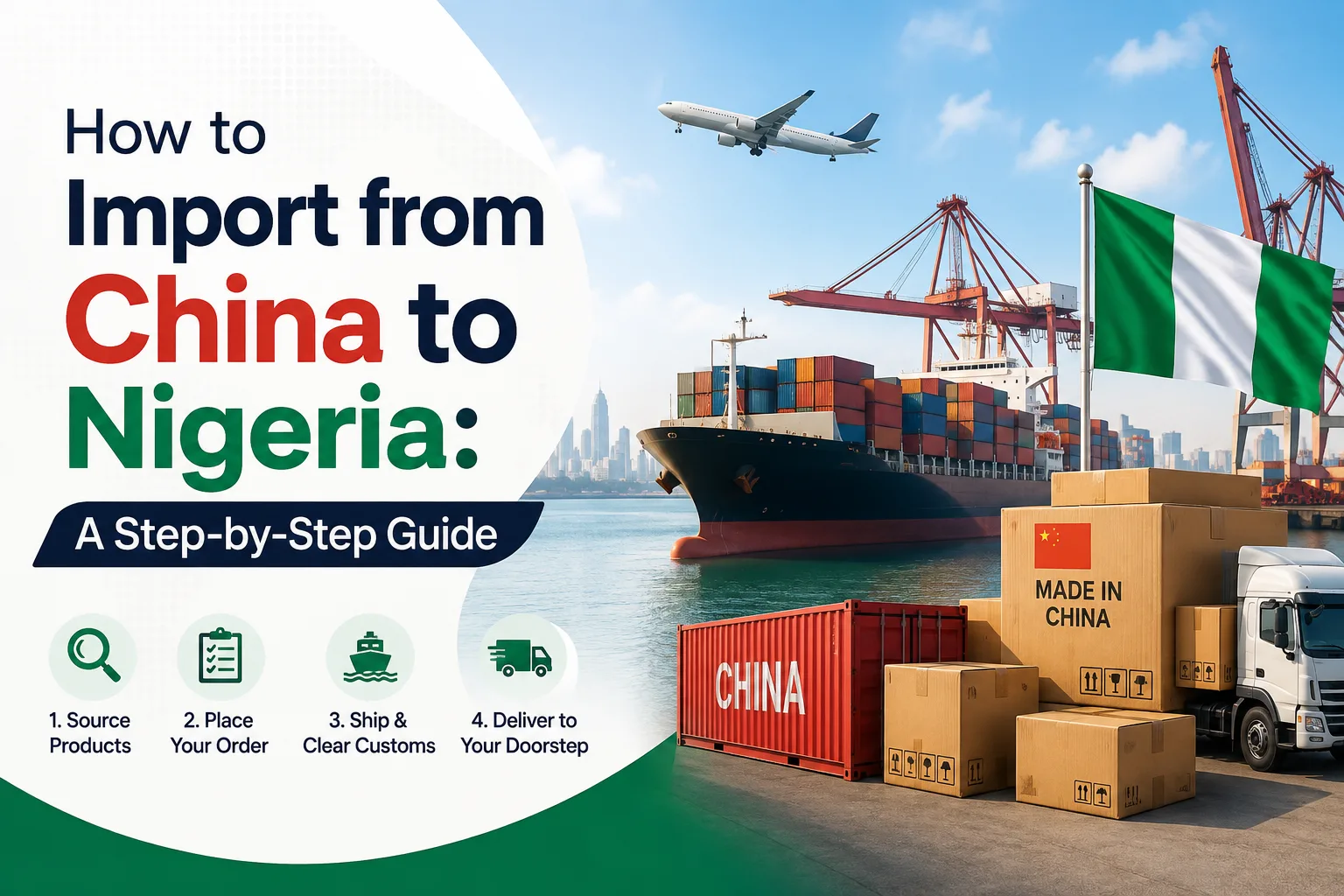
How to Import from China to Nigeria: A Step-by-Step Guide
To import from China to Nigeria, you need to identify a reliable supplier, agree on payment terms, arrange quality inspection before shipment, choose a freight method (sea or air), and clear the goods through Nigerian customs using the correct documentation.
The process typically takes anywhere from 25 to 60 days depending on shipping method and product type, and most first-time importers underestimate the paperwork more than the shipping itself.
This guide walks through the full process from sourcing to customs clearance, including realistic costs, common mistakes, and the documents you'll actually need at each stage.
Understanding the Basics of China-Nigeria Trade
China is Nigeria's largest source of imports, and the trade route is well established, but "well established" doesn't mean simple. Most delays and cost overruns happen not because the shipping lanes are unreliable, but because importers skip verification steps or misjudge how much documentation Nigerian customs requires.
There are two broad paths for how to order from China to Nigeria:
- Direct sourcing — you find suppliers yourself (via Alibaba, trade fairs, or referrals), negotiate directly, and manage logistics with a freight forwarder.
- Working with a sourcing agent — a company based in China handles supplier vetting, negotiation, quality inspection, and logistics coordination on your behalf.
Neither approach is inherently better. Direct sourcing gives you more control and can be cheaper for simple, low-risk orders. A sourcing agent earns its cost back on complex orders, new supplier relationships, or when you can't physically inspect the factory yourself — which is the situation most Nigeria-based importers are in.
Step-by-Step: How to Import Goods from China to Nigeria
1. Define your product and target specifications
Before contacting any supplier, write down exact specs: materials, dimensions, packaging requirements, and any certifications your product category needs in Nigeria (for example, SONCAP for many regulated goods). Vague specs are the single biggest cause of receiving the wrong product.
2. Find and vet suppliers
Search platforms like Alibaba or 1688 for manufacturers (not just trading companies, where possible) in your product category. Vetting should include checking business licenses, requesting factory photos or a video call, and — for larger orders — a third-party factory audit. A supplier's number of years on Alibaba tells you very little about actual production quality.
3. Request samples and confirm pricing
Get a physical sample before committing to a bulk order. Negotiate pricing based on order volume, but be wary of quotes that are dramatically below competitors — this often signals corner-cutting on materials.
4. Agree on payment terms
Common terms are 30% deposit before production and 70% before shipment, paid via T/T (bank transfer) or, for larger first orders, a letter of credit. Avoid sending full payment upfront to a supplier you haven't verified.
5. Arrange pre-shipment quality inspection
Before the goods leave the factory, a third-party inspector (or your sourcing agent) should check the order against your specs and the agreed quantity. This is the step most first-time importers skip, and it's the one that prevents the most expensive mistakes.
6. Choose your shipping method
Sea freight is cheaper for larger, less time-sensitive orders; air freight costs more but is faster and better for smaller or urgent shipments. Your freight forwarder or sourcing agent typically books this on your behalf.
7. Prepare import documentation
You'll need a Form M (processed through a Nigerian bank), a commercial invoice, packing list, bill of lading (sea) or airway bill (air), and — depending on the product category — a SONCAP certificate.
8. Clear customs and pay duties
Once goods arrive at a Nigerian port (commonly Lagos's Apapa or Tin Can Island) or airport, your customs broker files the entry, duties and levies are assessed and paid, and the goods are released for delivery.
What It Actually Costs to Import from China to Nigeria
Costs vary significantly by product category and volume, so treat the ranges below as a planning framework, not a quote.
| Cost item | What it covers | Notes |
| Product cost | Unit price × quantity | Often negotiable at higher MOQs |
| Inspection fee | Pre-shipment quality check | Usually a flat daily rate |
| Freight (sea) | Port-to-port shipping | Priced per CBM or per container |
| Freight (air) | Airport-to-airport shipping | Priced per kg, 3-5x sea freight cost per unit |
| Customs duty & levies | Import duty, VAT, other levies | [VERIFY: current Nigerian import duty rates and VAT percentage by HS code, as these vary by product category and change periodically] |
| Customs broker/clearing agent fee | Handles port clearance | Often charged as a percentage of CIF value |
| Local delivery | Port/airport to your warehouse | Distance-dependent |
ecause duty rates depend on the HS code of your specific product, get a written estimate from a licensed customs broker before finalizing your budget — don't rely on a general percentage you saw online.
Common Mistakes That Delay or Derail Shipments
- Skipping factory verification. A polished Alibaba storefront doesn't confirm the factory actually has the equipment or capacity claimed.
- Not budgeting for inspection. Inspection fees are small relative to the cost of receiving a container of defective goods.
- Missing or incorrect documentation. A mismatched invoice value or missing Form M can hold a shipment at port for weeks.
- Underestimating total cost. Product price is often only 50-60% of the landed cost once freight, duties, and clearing fees are added.
- Choosing air freight by default. It's faster, but for non-urgent bulk orders it can more than double your landed cost per unit compared to sea freight.
Sourcing Direct vs. Working with a Sourcing Partner
| Factor | Sourcing direct | Working with a sourcing partner |
| Supplier vetting | You do it yourself, often remotely | Local, on-the-ground verification |
| Quality control | You arrange inspection separately | Typically built into the process |
| Time investment | Higher — you manage each step | Lower — one point of contact |
| Best for | Simple, low-risk, repeat orders with a known supplier | New suppliers, complex orders, or first-time importers |
| Cost structure | Pay suppliers and forwarders separately | Service fee, often offset by fewer costly mistakes |
Frequently Asked Questions
How long does China importation to Nigeria take?
Sea freight typically takes 30-45 days door to door once you include production time, port transit, and customs clearance; air freight can cut transit to under two weeks but costs considerably more per unit.
Do I need a business registration to import from China to Nigeria?
Yes. You'll need a registered business (CAC registration) and a Form M processed through a Nigerian bank to import commercially. Informal, one-off imports for personal use follow different rules.
What products need SONCAP certification?
SONCAP applies to a defined list of regulated product categories, including many electronics and electrical goods.
Is it cheaper to import from China to Nigeria by sea or air?
Sea freight is cheaper per unit for most bulk orders and is the standard choice unless your order is small, lightweight, or time-sensitive.
Can I import from China to Nigeria without a middleman?
Yes, direct sourcing is possible and common, particularly for experienced importers with established supplier relationships. First-time importers often find that inspection and verification support reduces costly errors enough to offset the added cost.
Getting Started
Importing from China to Nigeria is a manageable process once you understand the sequence: verify the supplier, inspect before shipment, get the documentation right, and budget for the full landed cost rather than just the product price. Most shipment delays trace back to one of those four steps being skipped.
If you're planning your first order and want a second set of eyes on a supplier quote or a sample before you commit to full production, send us the details and we'll flag anything that looks off before you pay a deposit.