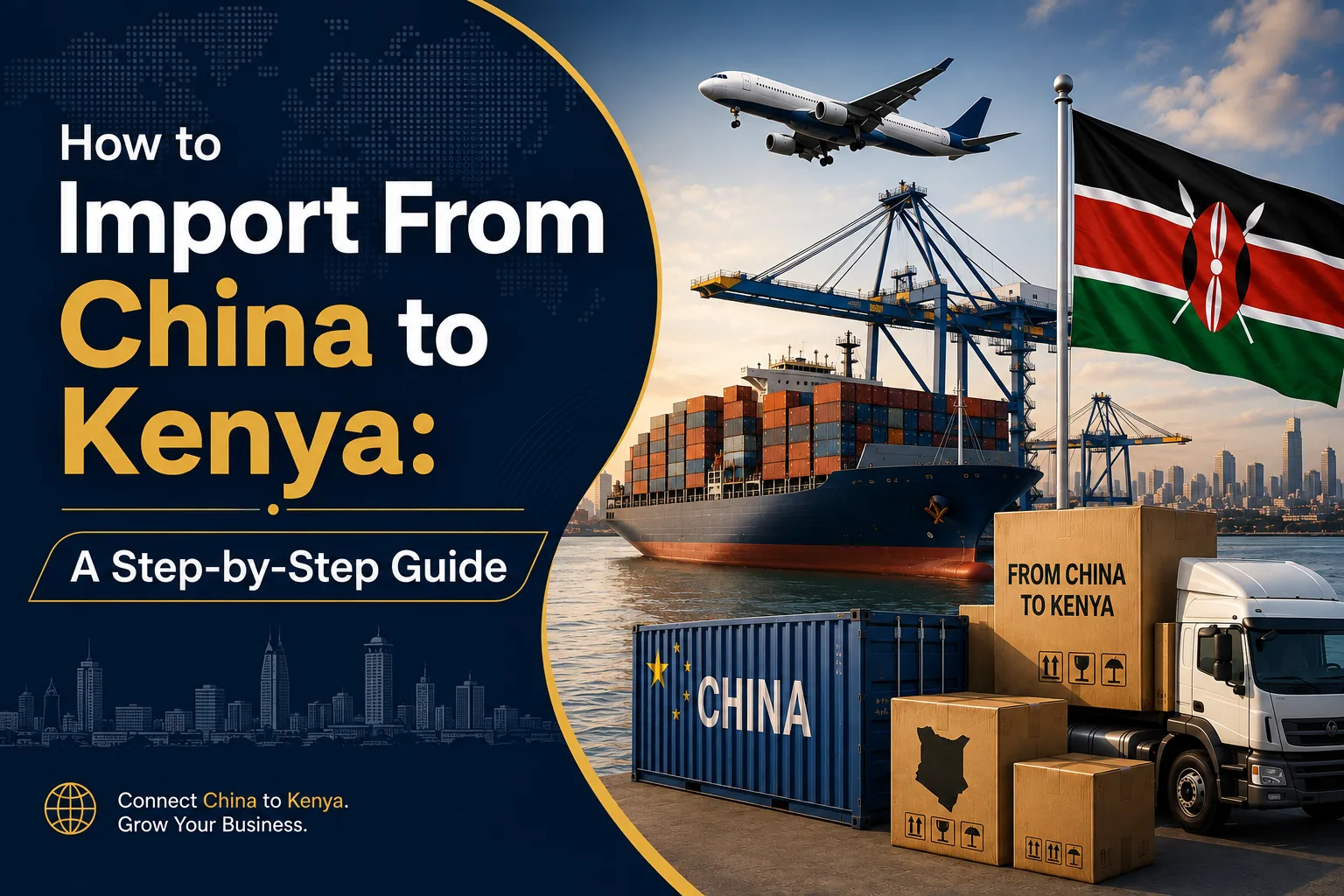
How to Import From China to Kenya: A Step-by-Step Guide
To import from China to Kenya, you need to identify a manufacturer, agree on pricing and terms, arrange quality inspection, get the correct HS code, ship by sea or air, and clear the shipment through Kenya Revenue Authority (KRA) at the port of entry. Most first-time importers underestimate the paperwork and lead time, not the manufacturing. That's usually where shipments stall.
This guide walks through the process in order, from finding a supplier to picking up goods in Mombasa or Nairobi.
Step 1: Find and Vet a Supplier
Most buyers start on Alibaba, a reasonable starting point, since it lists thousands of manufacturers and trading companies across nearly every category. The catch is that Alibaba doesn't verify product quality or production capacity, only that a business license exists. A supplier with a "Gold Supplier" badge or a high response rate can still ship inconsistent goods.
Two things separate a workable alibaba supplier from a risky one:
- Manufacturer vs. trading company. A trading company sources from multiple factories on your behalf and adds a markup. A manufacturer runs its own production line. Neither is automatically better, but you should know which one you're dealing with, since it affects pricing, minimum order quantities, and how much control you have over production.
- Verifiable track record. Ask for export history to your region, request the business license, and check whether they've handled shipments to East Africa before. A factory that's only sold domestically may not know export packing or documentation requirements.
If sourcing alone feels slow or quotes keep coming back inconsistent, a locally based china sourcing agent can shortcut the vetting process, visiting the factory in person and negotiating on your behalf. This matters more for a first order than for a repeat order with a supplier you already trust.
Step 2: Confirm Pricing, Terms, and Sample Quality
Before placing a production order, request a sample. Paying for the sample and its shipping is normal, and far cheaper than discovering a defect in a container of 5,000 units.
Negotiate and confirm in writing:
- Unit price and minimum order quantity (MOQ)
- Payment terms (commonly 30% deposit, 70% before shipment, though this varies by supplier and order size)
- Incoterm: FOB (supplier delivers to a Chinese port, you handle shipping from there) is the most common starting point for new importers, since it separates your logistics costs from the factory's production costs
- Production lead time and any penalties for delay
Step 3: Arrange Quality Inspection
Inspecting goods before they leave the factory, rather than after they land in Kenya, is the difference between catching a problem and absorbing it. A pre-shipment inspection typically checks:
- Product specifications against the agreed sample
- Packaging and labeling
- Quantity and carton count
- Basic function testing where applicable
It's easy to skip this step when you're moving fast, but it directly prevents the costliest mistake: paying freight on goods you can't sell.
Step 4: Choose Your Shipping Method
Shipping from China to Kenya generally comes down to two options, chosen based on order size, budget, and urgency.
| Factor | Sea Freight | Air Freight |
| Typical transit time | 25–40 days port to port | 5–10 days |
| Best for | Larger volumes, non-urgent restocks | Small, high-value, or urgent orders |
| Cost per kg | Lower for bulk shipments | Significantly higher |
| Common port of entry | Mombasa | Jomo Kenyatta International Airport, Nairobi |
| Container options | FCL (full container) or LCL (shared container) | N/A |
For a first order, many importers start with LCL (less than container load) sea freight or a smaller air shipment to test demand before committing to a full container.
Step 5: Prepare Import Documentation
Kenya requires a defined document set to clear goods through customs. Missing or mismatched paperwork is the biggest single cause of port delays and demurrage charges (storage fees for uncollected containers).
- Commercial invoice: matches the purchase order value and product description exactly
- Packing list: itemized contents, weights, and carton counts
- Bill of lading (sea) or air waybill (air): proof of shipment and ownership
- Certificate of origin: where applicable
- Import declaration form (IDF): filed with KRA before or on arrival
- PVoC certificate: Pre-Export Verification of Conformity, required for many regulated product categories
A licensed customs clearing agent in Kenya typically handles IDF filing and coordinates directly with KRA. Most importers use one rather than filing independently, especially first-timers.
Step 6: Clear Customs and Pay Duties
On arrival, your clearing agent submits documentation to KRA, duties and VAT are assessed based on the HS code and declared value, and the shipment is released once payment clears. Duty rates vary by product category under the East African Community Common External Tariff, and VAT typically applies on top of the duty-inclusive value. Confirm current rates with KRA or your clearing agent before finalizing a landed cost estimate; don't rely on a figure more than a few months old.
A Realistic Timeline
From order to delivery, a first shipment commonly takes 6–10 weeks: 2–4 weeks for production, 4–6 weeks for sea transit and clearance, or considerably less by air. Building in buffer time for a first order, rather than promising customers a tight window, avoids the most common frustration for new importers.
FAQ
How much does it cost to import from China to Kenya?
Total landed cost includes product cost, inland freight in China, ocean or air freight, insurance, duties, VAT, and clearing agent fees. As a rough planning figure, budget an additional 25–40% on top of the factory price, then confirm actual numbers once you have a specific HS code and shipment volume.
Do I need a license to import from China to Kenya?
Most general goods don't require a special license, but you do need a KRA PIN (tax identification number) to file an import declaration, and certain regulated categories, such as electronics and food-contact items, require additional certification such as PVoC. Check your specific product's requirements before ordering in volume.
What is the difference between FOB and CIF when buying from a supplier?
Under FOB (Free on Board), the supplier's responsibility ends once goods are loaded at the Chinese port, and you arrange and pay for shipping from there. Under CIF (Cost, Insurance, Freight), the supplier arranges shipping to your destination port and bundles that cost into the price. FOB generally gives you more control and often a lower total cost if you have a reliable freight forwarder; CIF is simpler for a first-time importer who isn't ready to manage logistics separately.
How long does it take to import from China to Kenya?
Sea freight shipments typically take 6–10 weeks door to door including production time, customs clearance, and inland transport to your location. Air freight can cut transit time to under two weeks but at a substantially higher cost per kilogram.
Can I import from China to Kenya without a middleman?
Yes. Experienced importers often deal directly with factories and manage their own logistics and clearance. For a first shipment, though, a sourcing agent or supply chain management partner reduces the risk of costly mistakes in supplier vetting, documentation, or quality control: errors that are far more expensive to fix after goods have shipped than to prevent beforehand.
Getting Your First Shipment Right
Importing from China to Kenya isn't complicated once you've done it, but the first shipment is where most expensive mistakes happen: wrong HS code, skipped inspection, incomplete paperwork. Working through each step deliberately, rather than rushing an order, is what separates a smooth first import from one that sits in demurrage at Mombasa.
If you'd rather have someone manage supplier vetting, inspection, and shipping coordination on your behalf, AihuaSourcing's sourcing and supply chain services cover the process end to end, from finding a manufacturer in China to coordinating delivery. You can also read more about how we work with importers across East Africa and the Gulf.
Ready to source your first shipment? Request a sourcing plan with your product details, and get a cost and timeline estimate before you commit to an order.